
A new door, start to finish
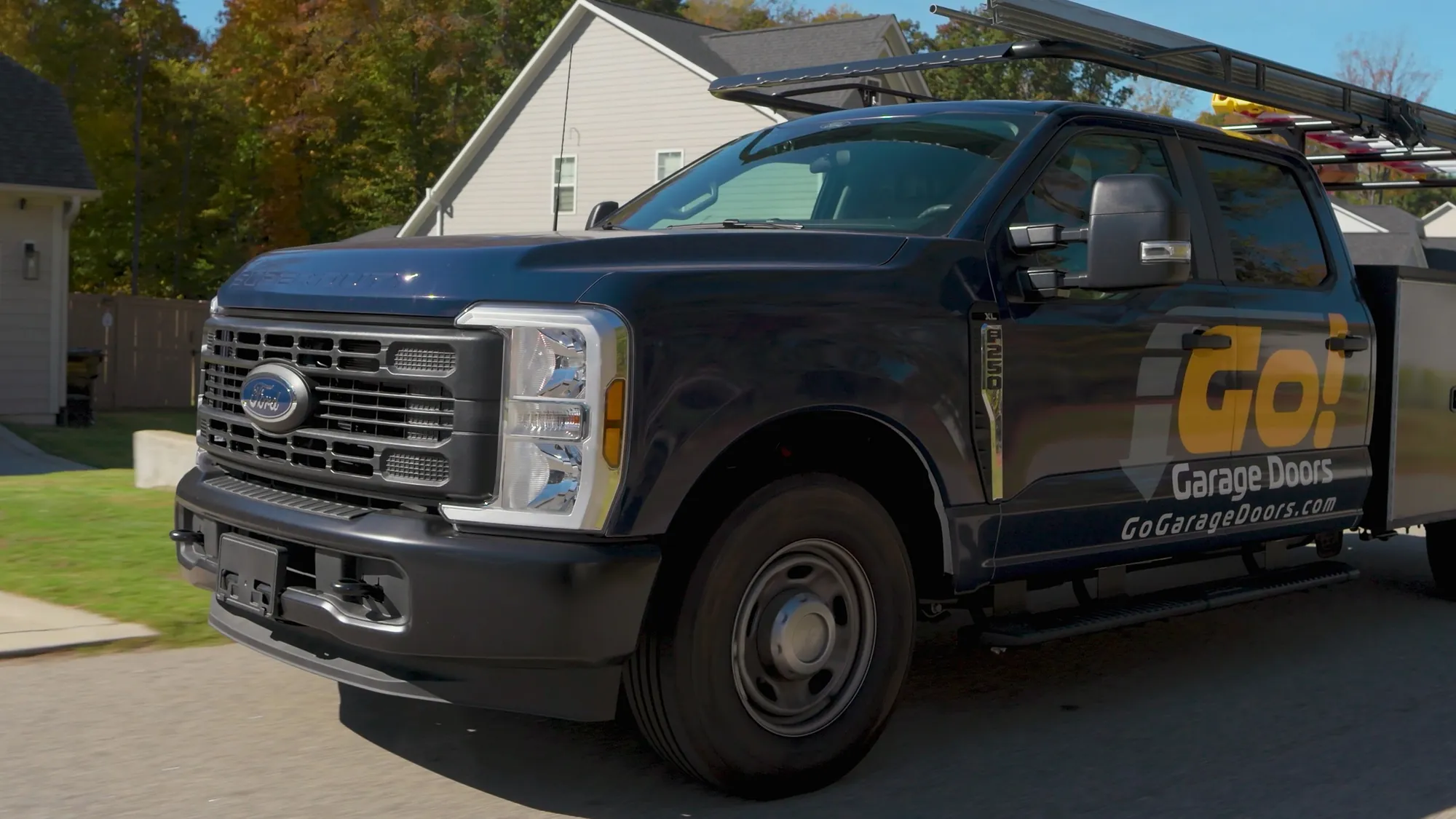
A damaged panel does not always mean a new door. Here is when one section can be swapped and when it cannot.
Sometimes a single damaged panel can be replaced, but only if the manufacturer still makes a matching section for your door. If it does not, the door is old, or the damage runs across several panels, replacing the whole door usually makes more sense. We tell you which one applies before you spend anything.
Updated
The answer depends on the door more than on the damage.
Replacing one panel on a door you will replace in two years is money that does nothing for you, and we would rather say so.
A match starts with identifying the door. Many doors carry a label on the back of a section, often near an end or the bottom edge, with the manufacturer and model. A photo of the whole door and the label is enough for us to start checking availability.
Position matters too. The top and bottom sections are not the same as the middle ones: the top carries the fixtures that connect to the opener, and the bottom carries the brackets and the seal retainer. We order the section for the exact position.
Color is the other half. Factory finishes fade, so a new panel beside a door that has seen years of coastal sun can look slightly different at first. On steel doors that can often be blended with paint, and on wood and composite carriage doors the new section can be stained or painted to suit.
A bumper tap, a basketball or storm debris can all leave a dent. A shallow dent in a flat panel with no crease is usually cosmetic. We check for what is not:
A badly bent section can jam in the track and push extra load onto the opener, so stop using the door and call if it is not closing cleanly.
Salt air, humid summers, lawn sprinklers and standing water at the garage sill are hard on the bottom panel first. Surface rust on a painted edge can often be cleaned, treated and repainted. Rust that has eaten through the steel, or an insulated panel whose foam core is exposed and soaked, is a replacement. A worn bottom weather seal that lets water sit against the door is a common reason the bottom panel rusts first, so we look at that too.
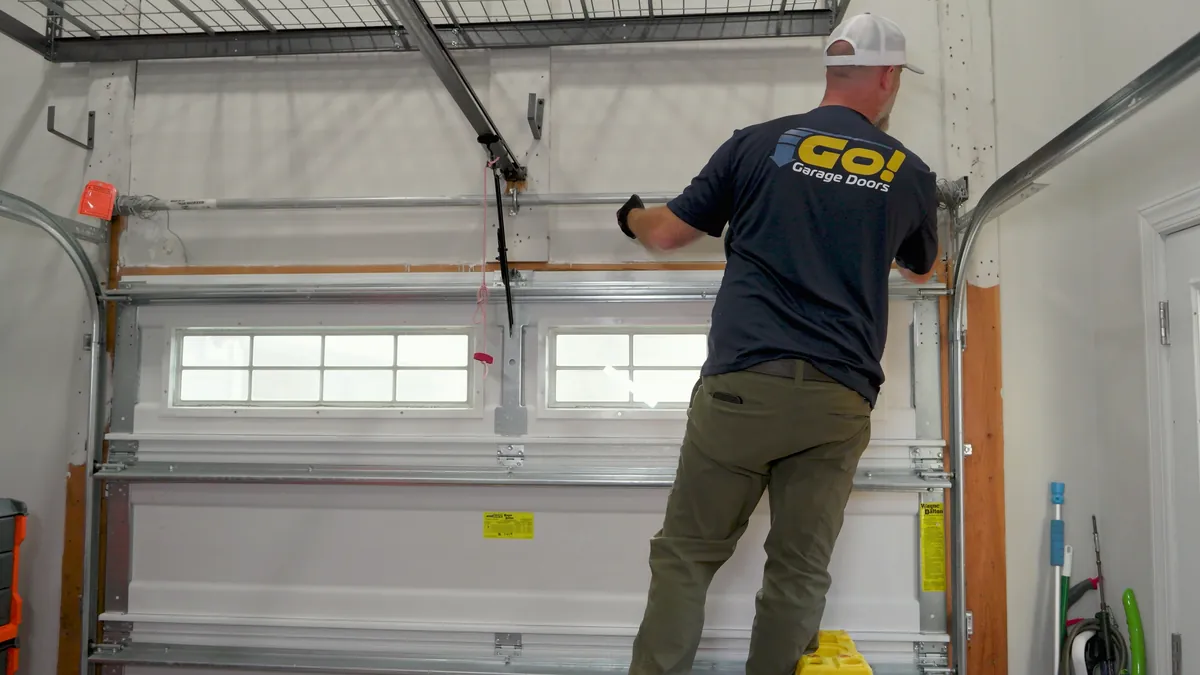
We look at the damage, identify the door and check whether a matching section is available. Then you get a plain comparison: the price to replace the panel, the price to replace the door, and our recommendation. Spring-loaded doors are heavy and under tension, so panel swaps are a technician job, not a driveway project.
If the better spend is a new door, our installation page and the new garage doors overview cover what comes next. For anything else that has gone wrong with the door, start at garage door repair, and see the materials guide if you are weighing steel against other options.
Insulated panels are a sandwich of steel and foam, and a section with a failed core or a cracked window insert needs replacing as a unit. A wind-rated door's rating applies to the whole assembly, and a section that is not the exact same part can change that. It is one more reason we stay with the manufacturer's own sections. See our wind-rated door guide for how ratings work in North Carolina.
FAQ
Call now or book online for an arrival window anywhere in the Wilmington area.