
An opener visit, start to finish
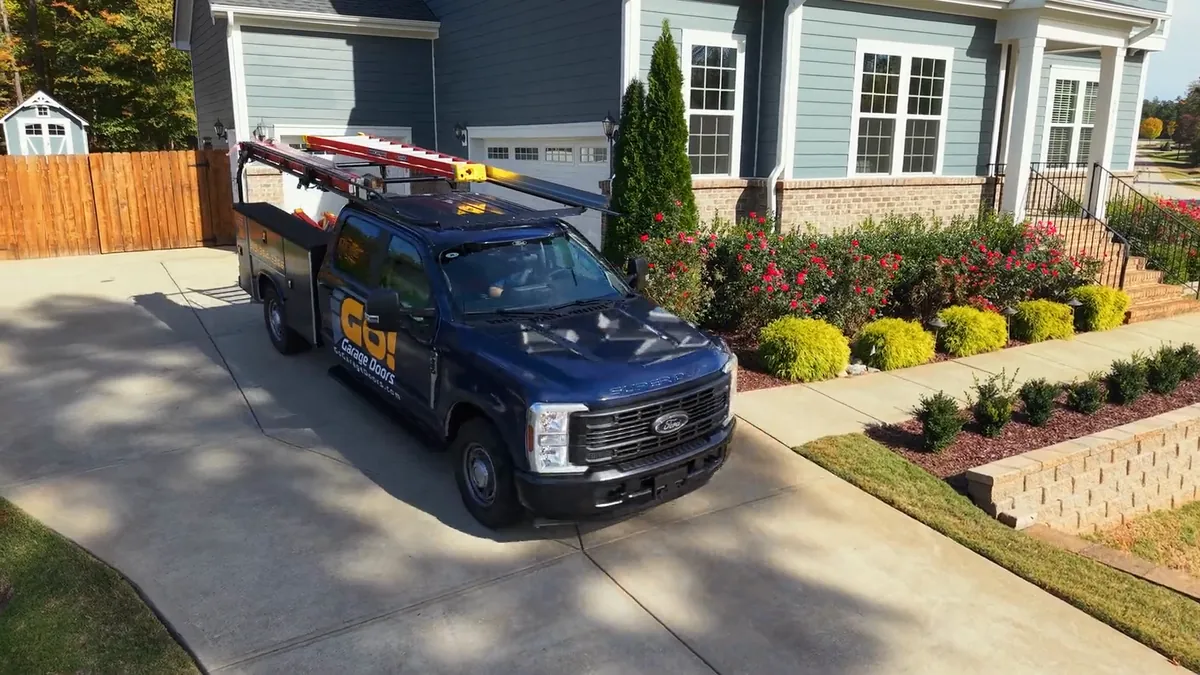
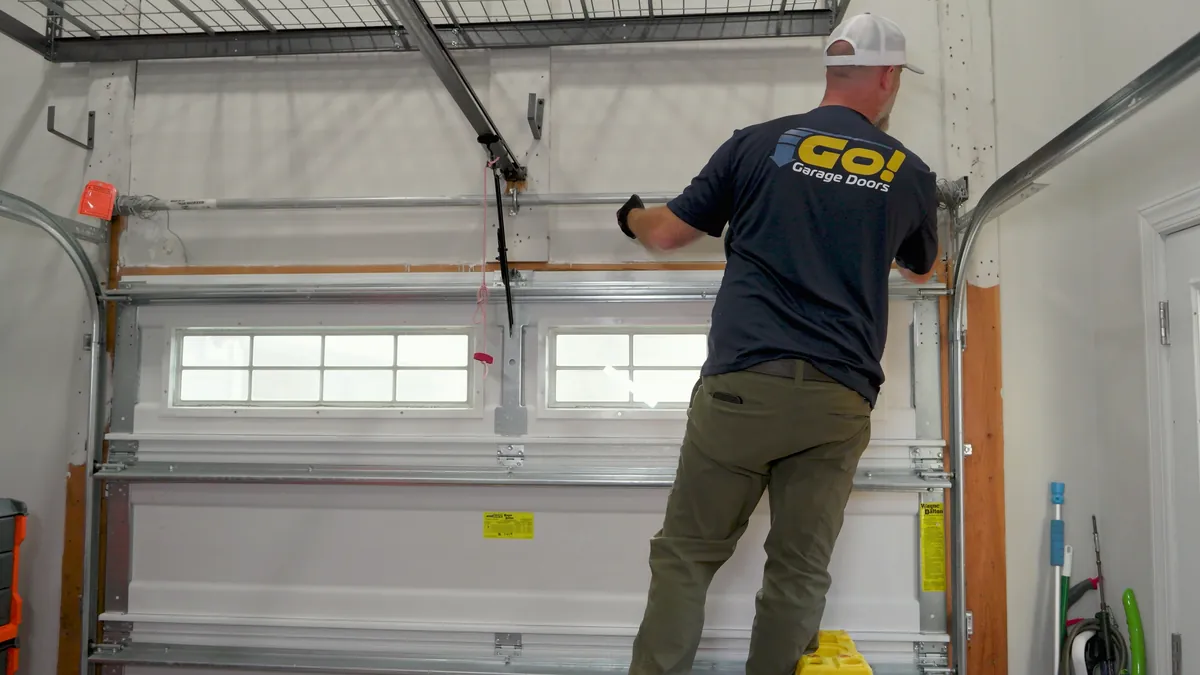
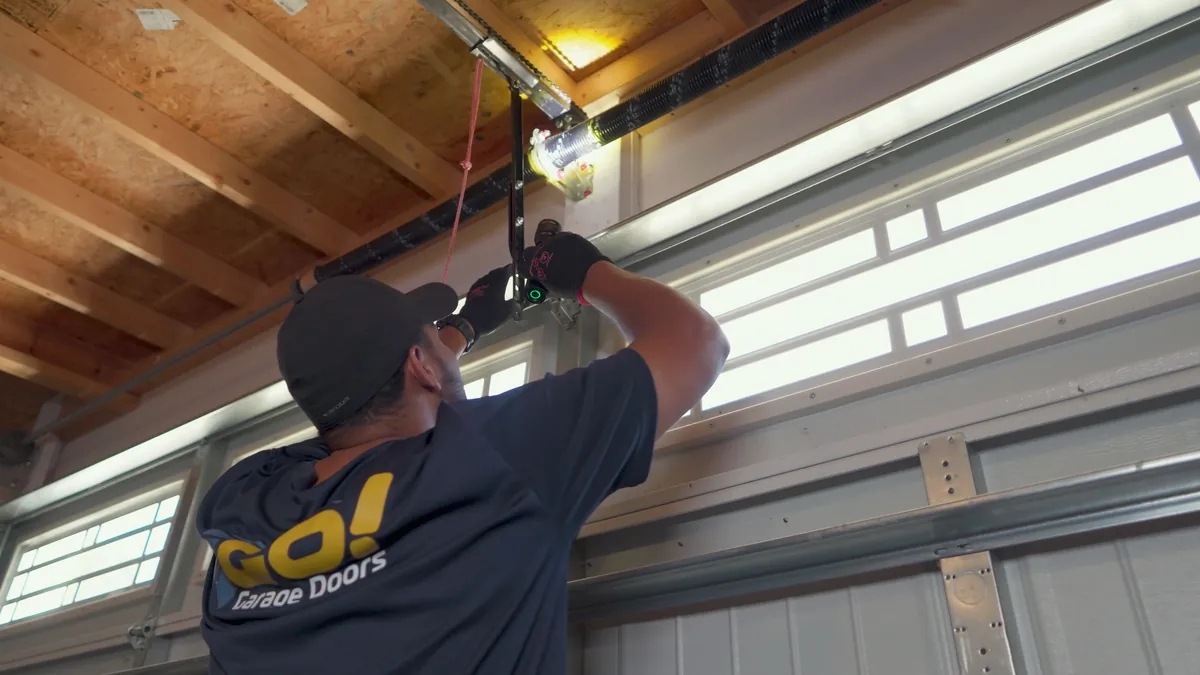
When the door goes down and bounces back up, the photo eyes are the first thing to check.
If your garage door closes partway and reverses, or the opener lights blink and the door will not close, the safety sensors are the likeliest cause. Clean both lenses, check that each LED glows steady, and nudge any sensor that has been knocked out of line. If the lights stay dark or keep blinking, call us, and never disconnect the sensors to get the door down.
Updated
Garage door safety sensors, often called photo eyes, are a matched pair mounted on either side of the door, a few inches above the floor. One sends an invisible beam and the other receives it. If anything breaks the beam while the door is closing, the opener stops and reverses. Since 1993, every new residential opener has had to include a second safety device that stops and reverses the door without touching anything, and photo eyes are the usual one. They are the reason a garage door is not a hazard to a child, a pet or a bike left in the doorway.
Call if the LEDs are completely dark, the problem comes and goes with rain or heat, the sensors keep drifting out of alignment, the wire runs behind drywall, or you are not sure which sensors fit your opener. We trace the wire, rewire or replace the pair, and test reversing before we leave. If the door is doing something else too, see garage door won't close, opener troubleshooting or opener repair.
Disconnecting the sensors, or taping them over, defeats the safeguard that is there for a reason. A door that closes with no protection can injure someone and can damage a car. If the sensors are the problem, fix the sensors. A yearly tune-up includes a photo-eye and auto-reverse check.
Sensors belong low, about 6 inches or less above the floor, so the beam catches a child or a pet. They must sit directly across from each other, on brackets screwed to something solid, with lenses pointing straight at one another. Brackets fixed to a flexible trim board drift. We re-mount them on solid backing when we find that, and we check the wire is stapled loosely enough that nothing pinches it.
Many openers use their lights or a status LED to flag a sensor fault. Common signs are a door that will not close while the lights flash, or a light that stays dark even though the opener has power. The pattern varies by brand, and your manual lists it. If you are not sure, a blinking sensor LED or a flashing opener light is still a good cue to start with the lenses and alignment.
FAQ
Call now or book online for an arrival window anywhere in the Wilmington area.